The Big British Ski Boot Survey: four in five skiers are suffering in their boots
We asked 2,560 skiers about their ski boots, how their skiing is changing as they get older and what they spend on the slopes. The results reveal a nation of skiers putting up with numb toes and bruised shins, abandoning expensive boots after a single trip, and planning to keep skiing well into later life, as long as their bodies and their kit allow.
These are the findings from The Big British Ski Boot Survey, a study by The Skiers Lounge into how British skiers feel about the most important piece of kit they own.
The key findings
British skiers told us what their boots are really like to live with, what could stop them skiing and where they wish they had spent their money:
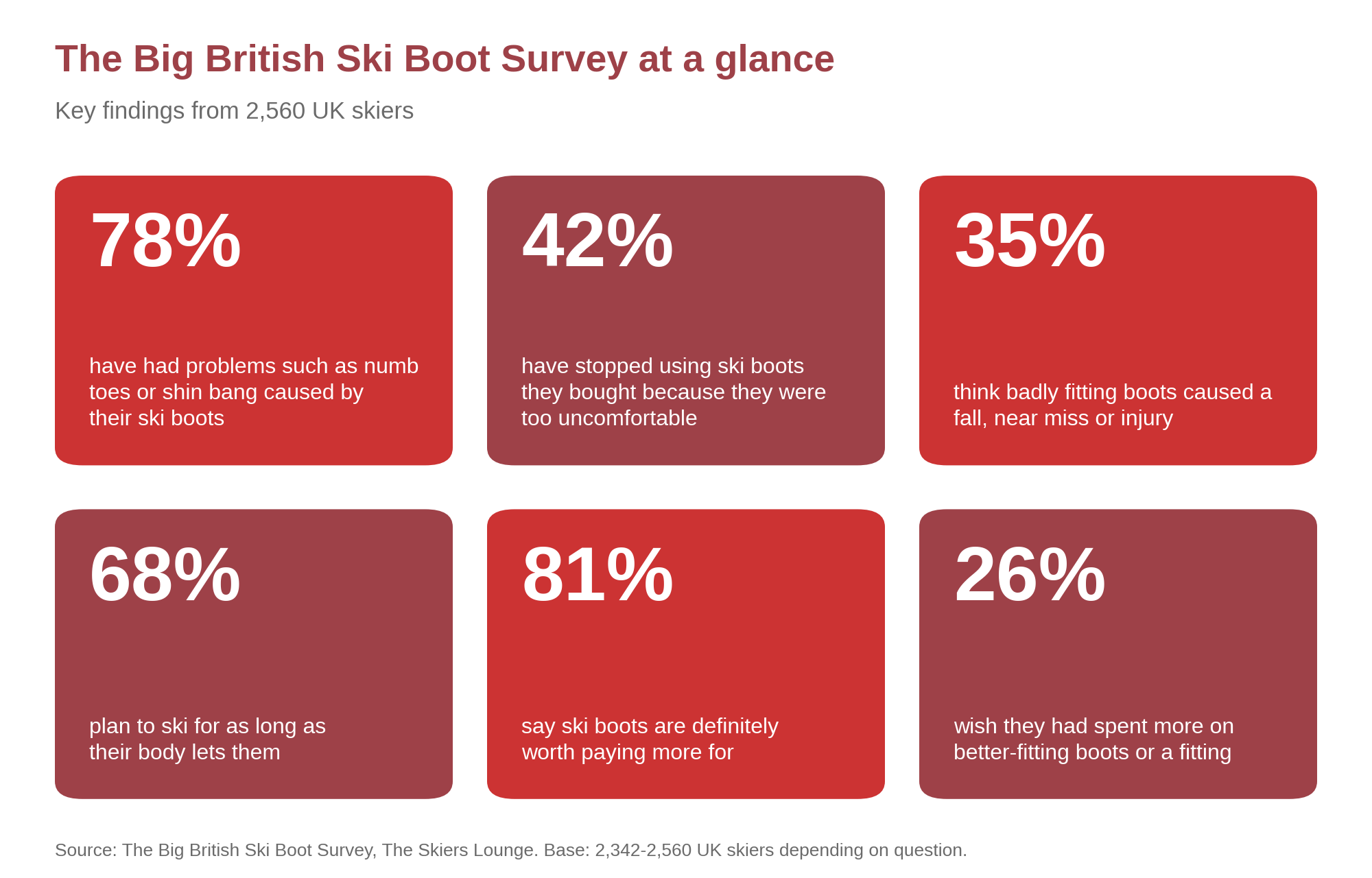
- 78% of skiers have had at least one problem caused by their ski boots, from numb toes to shin bang.
- More than a third (35%) believe badly fitting boots have contributed to a fall, near miss or injury, for them or someone they ski with.
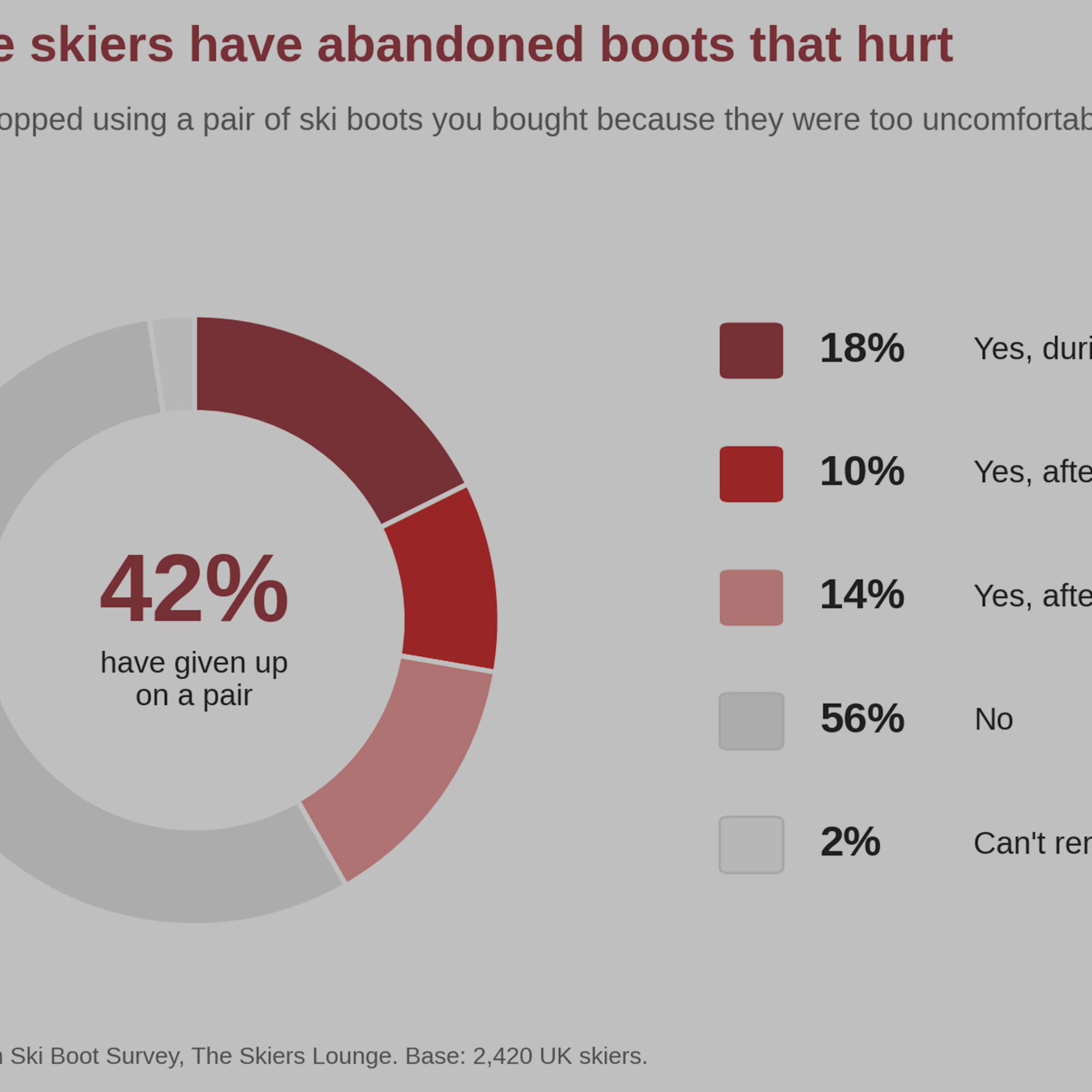
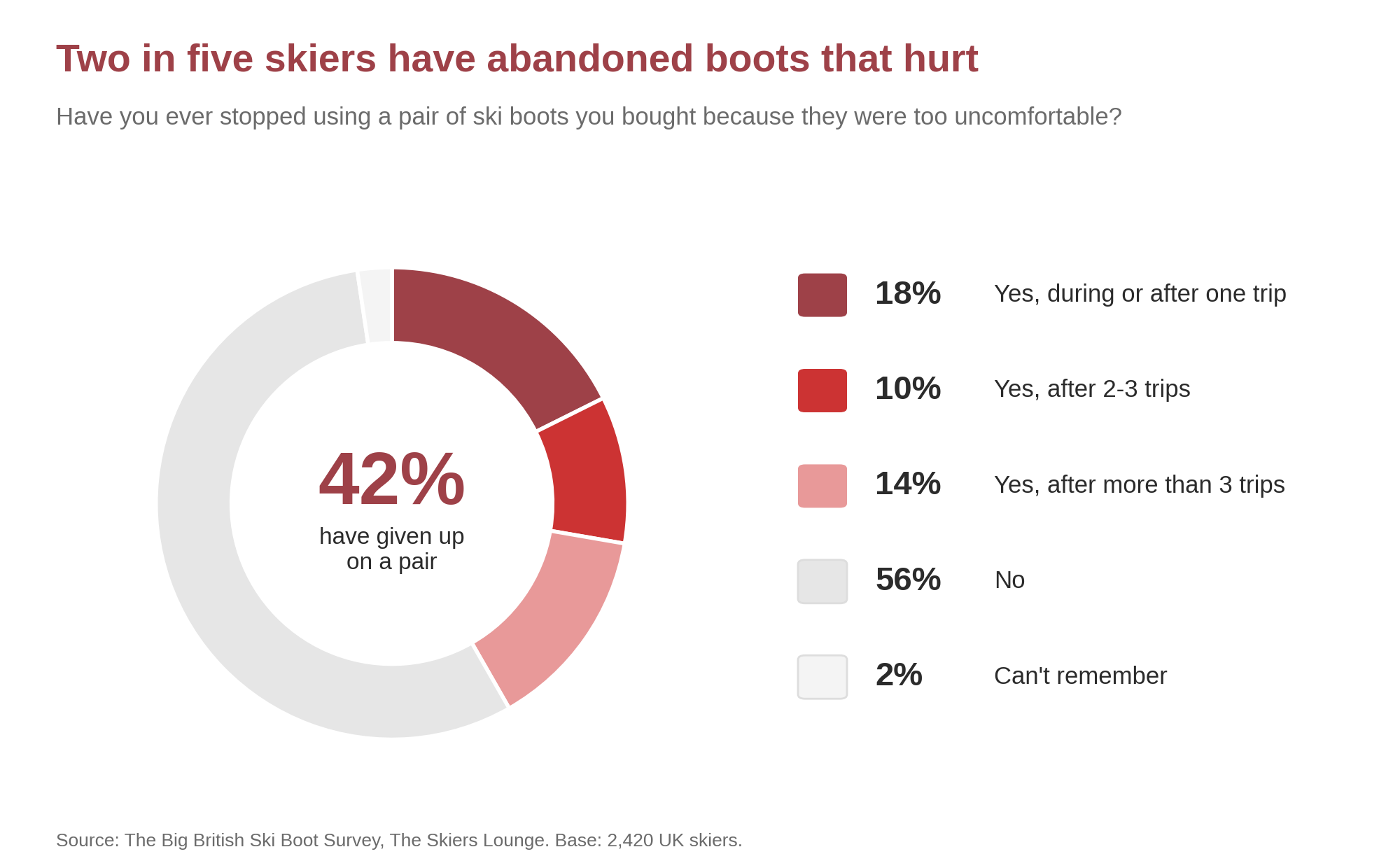
- Two in five (42%) have stopped using a pair of ski boots they bought because they were too uncomfortable, and almost one in five (18%) gave up during or after the very first trip.
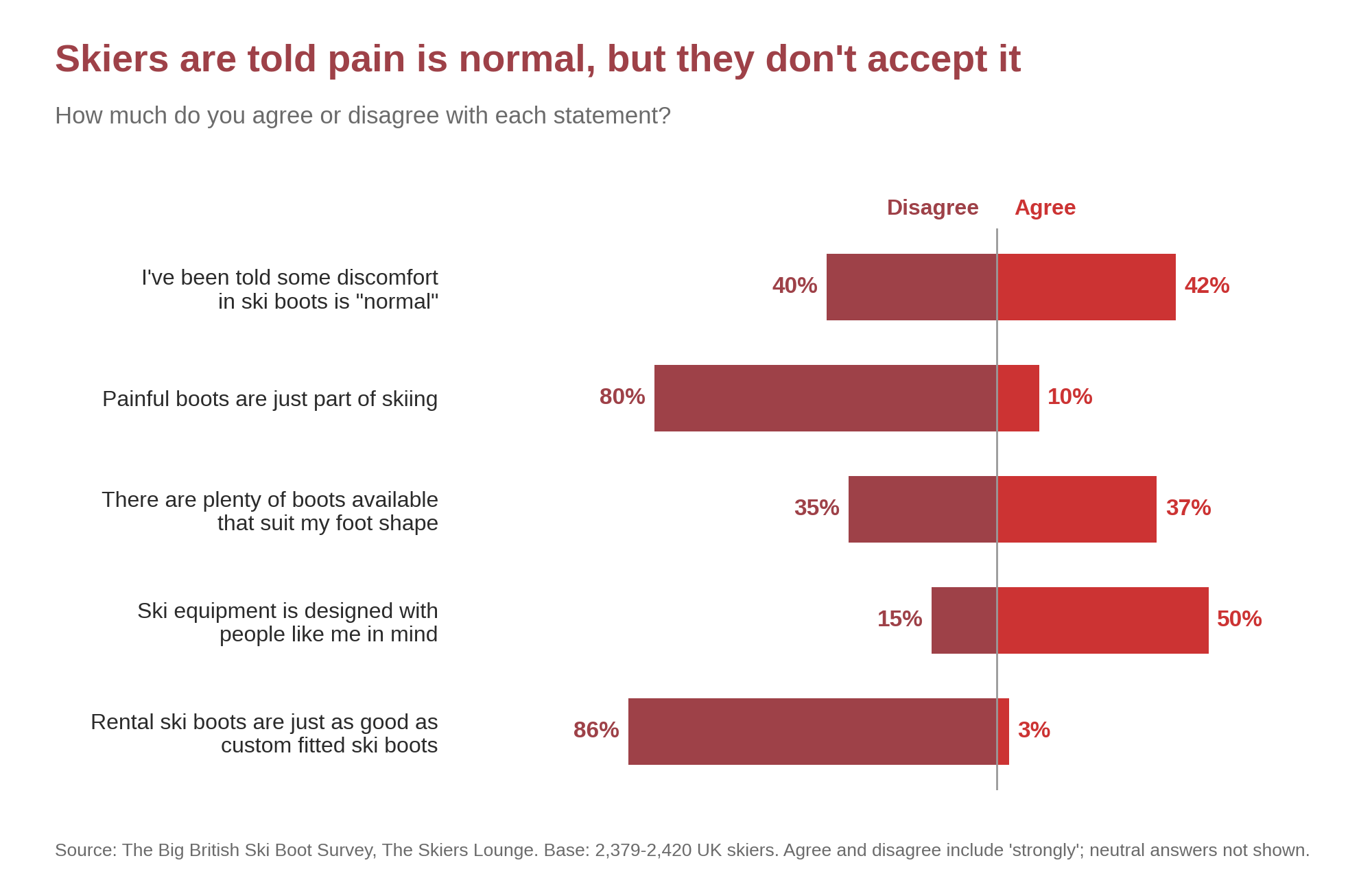
- 42% have been told that some discomfort in ski boots is “normal”, yet 80% reject the idea that painful boots are just part of skiing.
- 68% plan to keep skiing for as long as their body lets them, and 46% ski more often now than they did 10 years ago.
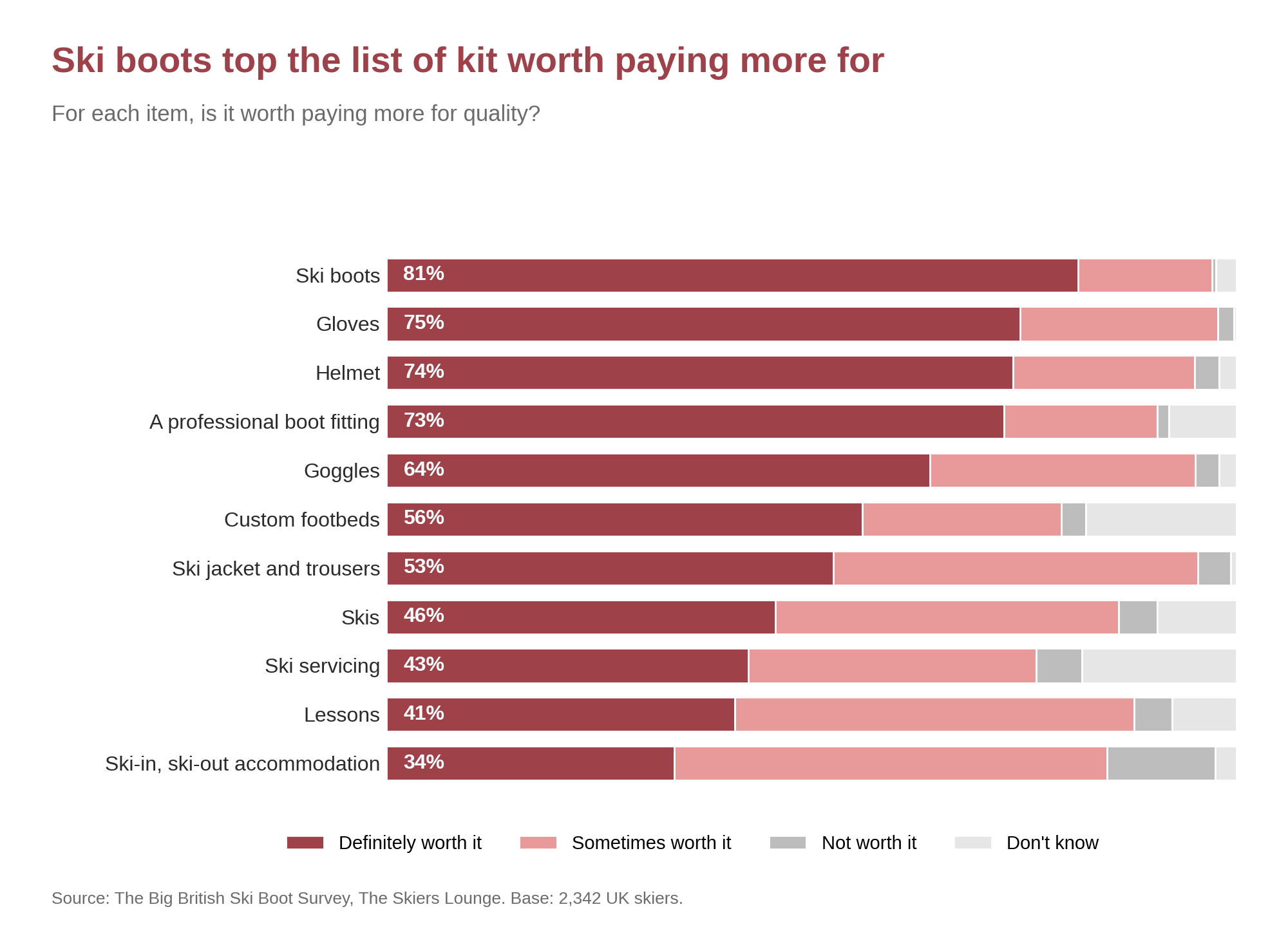
- Ski boots top the list of kit worth paying more for, with 81% saying they are definitely worth the investment.
- Better-fitting boots or a professional boot fitting is the number one thing skiers regret not spending more on (26%).
Four in five skiers suffer because of their boots…
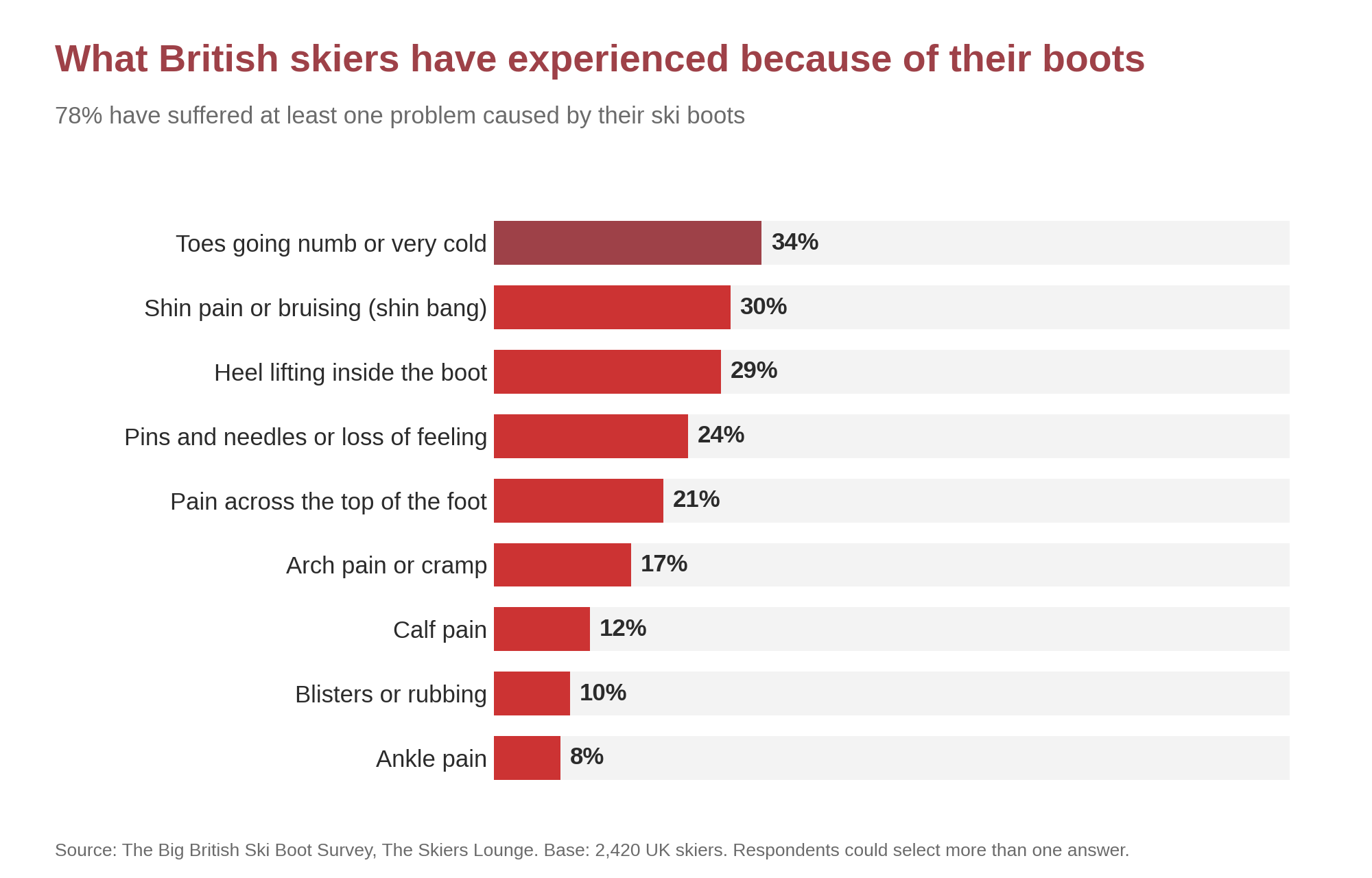
Ski boots are supposed to be the link between skier and ski, but for most British skiers they are also a source of pain. 78% of respondents said they have experienced at least one problem caused by their boots.
Toes going numb or very cold is the most common complaint, affecting a third of skiers (34%). This is followed by shin pain or bruising, often called shin bang (30%), heels lifting inside the boot (29%) and pins and needles or loss of feeling in the foot (24%). One in five (21%) have had pain across the top of the foot, while 17% have suffered arch pain or cramp.
The problem goes beyond comfort. More than a third of skiers (35%) think badly fitting boots have contributed to a fall or injury, for themselves or someone they ski with. 24% point to a fall or near miss, while one in ten (10%) say poorly fitting boots have led to an injury.
“Pain in ski boots isn’t something anyone should have to put up with. Most of the problems we see, from numb toes to shin bang, come down to boots that were never right for the skier’s foot in the first place. The good news is that almost all of them can be fixed.”
Scott Hargrave, owner of The Skiers Lounge
Two in five skiers have given up on boots they paid for…
Painful boots are not just ruining days on the slopes. They are also ending up in lofts, landfill and second-hand listings. Two in five skiers (42%) have stopped using a pair of ski boots they bought because they were too uncomfortable, and 18% gave up on them during or after just one trip.
When asked how much they had paid for those boots, almost half (46%) said £300 or more, and 14% said £450 or more.
Once abandoned, 15% of skiers have left their boots sitting unused in a loft, garage or cupboard, 9% have thrown them away, 12% sold them and 12% gave them away or donated them. Only 2% recycled their boots through a recycling scheme, while 13% took them back to a fitter to be adjusted.
“Few skiers realise that ski boots can be recycled, with the complexity and cost of the process historically making this difficult.
As one of the first retailers to embrace Tecnica and Nordica’s pioneering Recycle Your Boots programme, The Skiers Lounge is proud to be part of the solution.
Customers can leave their old ski boots with us, regardless of brand, for collection and specialist recycling in Italy. Valuable plastics and metals are recovered and repurposed, including for the manufacture of new ski boot components.
For us, responsible retailing doesn’t end with fitting new boots. It extends to what happens to the old ones.”
Scott Hargrave, owner of The Skiers Lounge
Often told that pain is normal, but skiers aren’t buying it!
More than two in five skiers (42%) say they have been told that some discomfort in ski boots is “normal”. Yet most skiers don’t accept it: 80% reject the idea that painful boots are just part of skiing, and 86% disagree that rental boots are as good as custom fitted boots.
Finding the right boot is not always easy. Only 37% agree there are plenty of boots available that suit their foot shape, and nine in ten skiers (90%) have at least one foot or body characteristic that can affect how a boot fits. Wide feet are the most common (43%), followed by narrow feet or heels (25%), a previous foot, ankle or knee injury (25%), high arches or insteps (24%), large or muscular calves (24%) and poor circulation or cold feet (19%).
Professional fitting is the most popular way to buy boots, with 63% choosing their current or most recent pair through a fitting in a specialist shop. However, one in five (20%) bought their boots without a professional fitting, whether that meant trying them on in a shop, buying online without trying them on or buying second-hand. Almost a quarter (24%) have never had a professional boot fitting but would consider one.
60 isn’t a ski-by date…
British skiers have no intention of hanging up their boots. Almost half of the skiers we surveyed (46%) are aged 55 or over, and three in ten (30%) are 60 or older. Two-thirds (68%) plan to keep skiing for as long as their body lets them, and only 13% expect to stop before the age of 70.
Many are skiing more than ever. 46% ski more often than they did 10 years ago, compared with just 14% who ski less, and 69% say they are a better skier now than they were a decade ago. It is never too late to start either: almost one in five (19%) did not take up skiing until they were 30 or older.
60% of skiers disagree that skiing is seen as a young person’s sport. However, almost a third (32%) feel that ski brands and shops overlook more mature skiers.
What could stop British skiers?
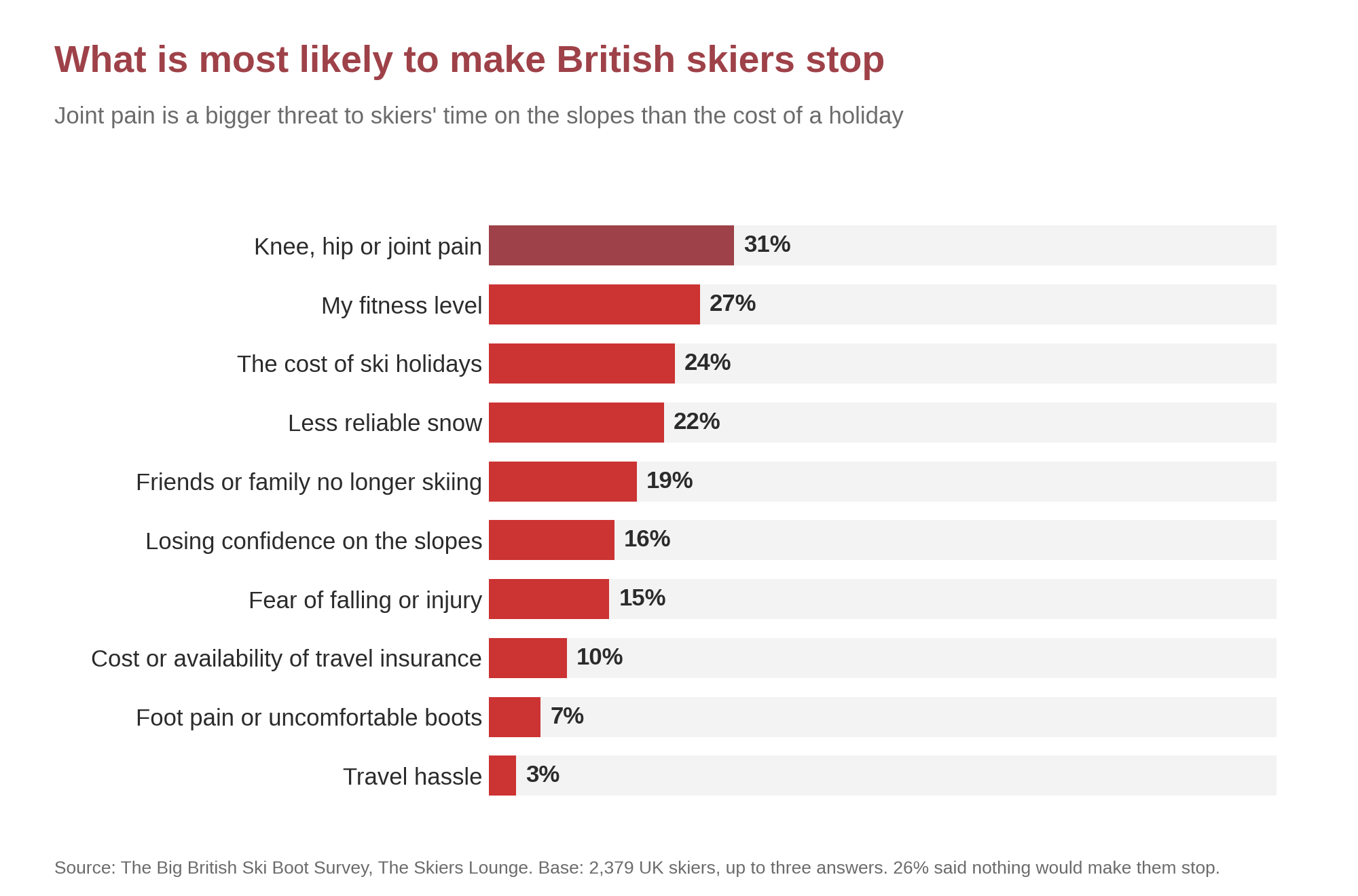
Knee, hip or joint pain is the biggest threat to skiers’ time on the slopes, named by 31% as one of the things most likely to make them stop. This is followed by fitness levels (27%), the cost of ski holidays (24%) and less reliable snow (22%). Almost one in five (19%) worry about friends or family no longer skiing, while 16% are concerned about losing confidence on the slopes. A determined 26% say nothing will make them stop.
What keeps skiers on the slopes for longer?
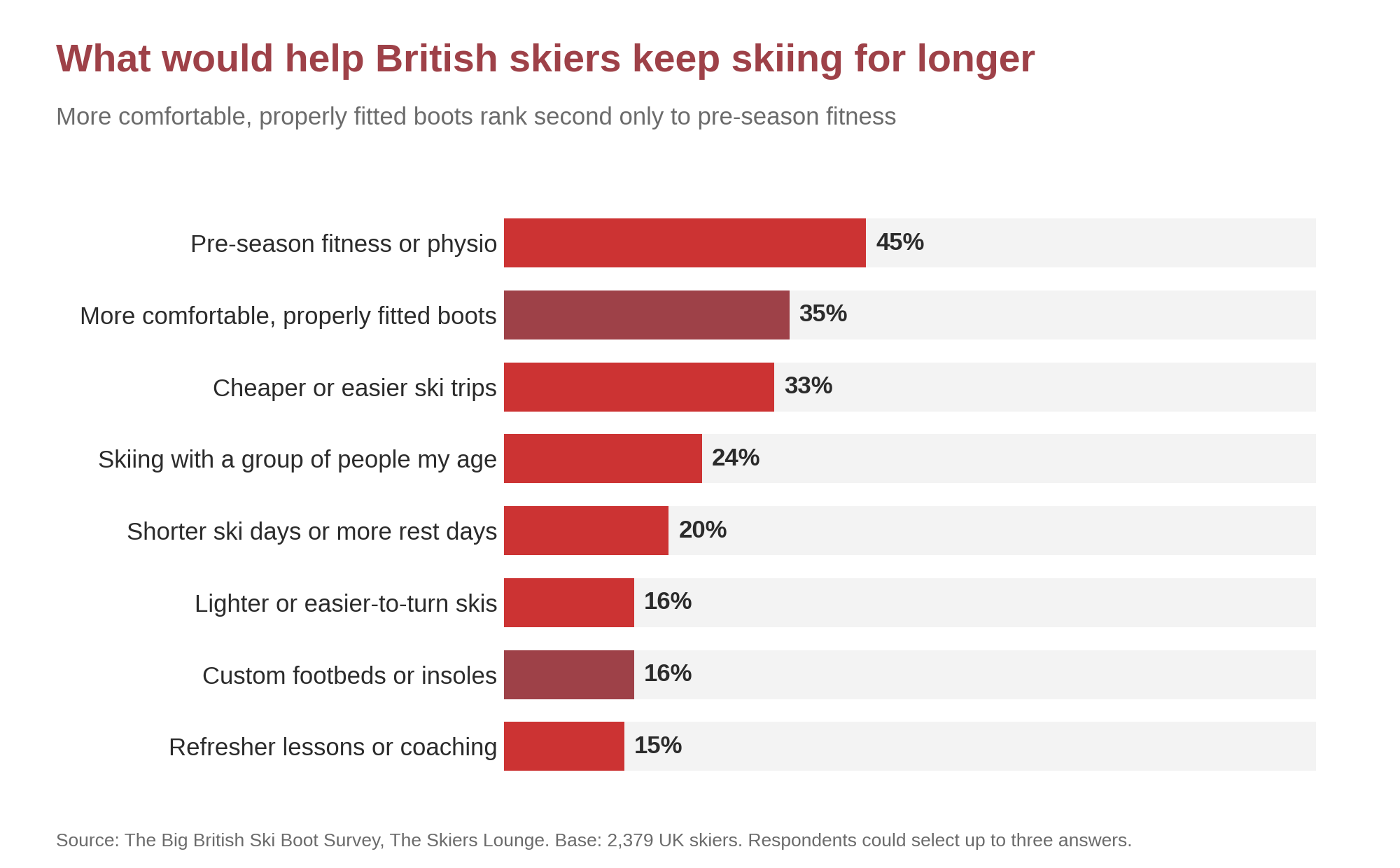
Pre-season fitness or physio is the top thing skiers say would help them keep skiing for longer (45%). More comfortable, properly fitted boots come second (35%), ahead of cheaper or easier ski trips (33%). A quarter (24%) would like to ski with a group of people their own age, while 16% say custom footbeds or insoles would help.
As skiers get older, their kit needs to keep up. 42% say their body has changed in ways that affect how their ski kit feels, such as foot shape, flexibility, joints or strength. Of those, two in five are still using the same kit. Almost a quarter of all skiers (24%) say they would ski more often if their boots were more comfortable.
“Some of our customers are skiing better in their sixties and seventies than they did in their forties. Bodies change over the years, and your boots need to change with them. A boot that fitted perfectly ten years ago may not be the right boot for you today. Professional fitting, alongside support systems such as the UK-designed Ski~Mojo, can help skiers stay on the slopes for longer.”
Scott Hargrave, owner of The Skiers Lounge
Where skiers wish they had spent their money…
A ski holiday is a significant investment. More than a third of skiers (35%) spent £1,750 or more per person on their most recent trip, including travel, accommodation, lift pass, hire, lessons and food, while the most common spend was £1,250 to £1,749 (31%).
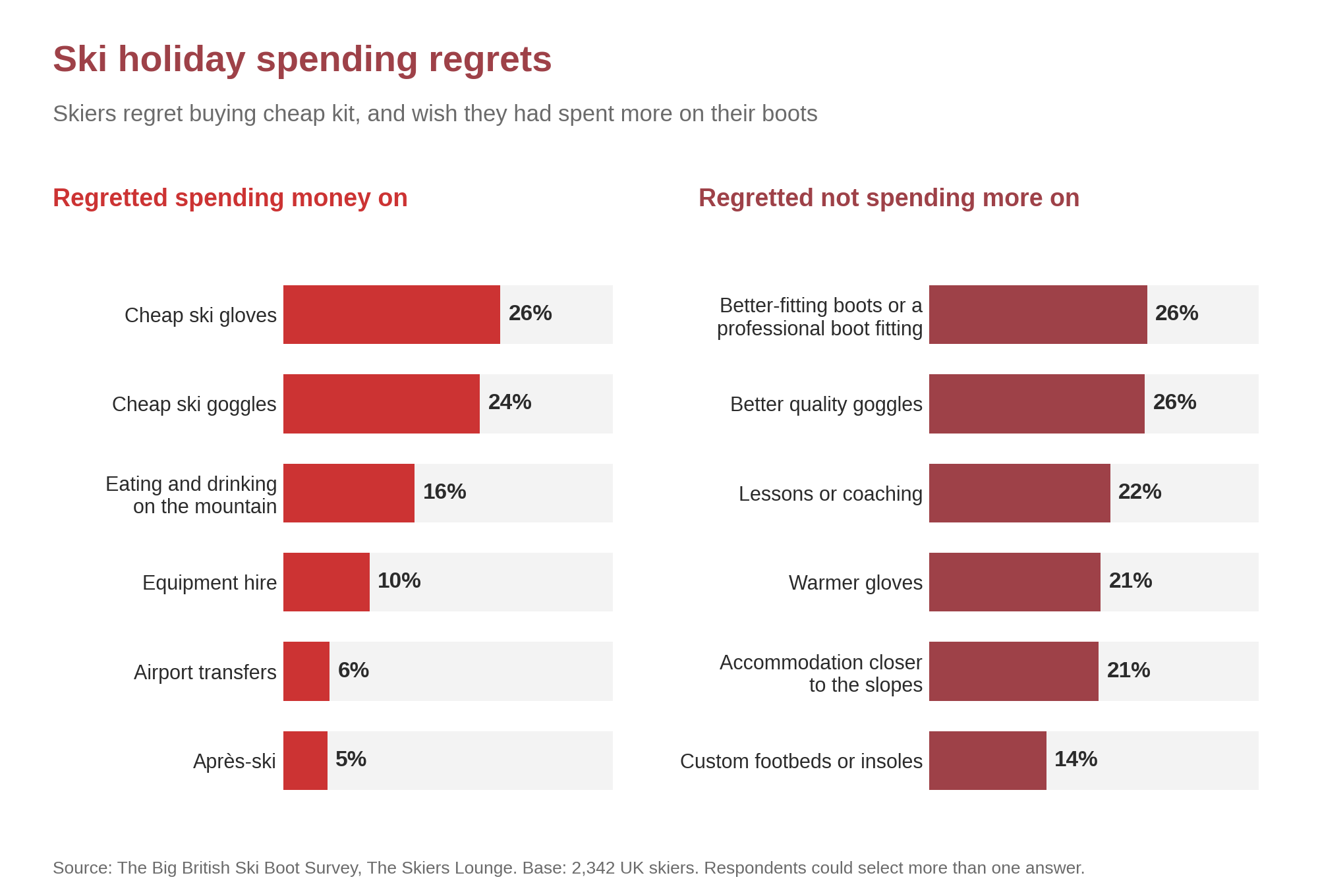
When it comes to regrets, cheap kit tops the list. 26% regret buying cheap ski gloves and 24% regret buying cheap goggles, while 16% regret what they spent on eating and drinking on the mountain. Just 2% regret buying ski boots.
Asked what they regret not spending more on, better-fitting boots or a professional boot fitting comes out on top (26%), alongside better quality goggles (26%). This is followed by lessons or coaching (22%), warmer gloves (21%) and accommodation closer to the slopes (21%).
Ski boots are the kit most worth investing in …
Skiers are clear about where quality counts. Ski boots top the list of kit worth paying more for, with 81% saying they are definitely worth it and fewer than 1% saying they are not. Gloves (75%), helmets (74%) and a professional boot fitting (73%) follow close behind, while ski-in, ski-out accommodation is seen as the least essential upgrade, with 34% saying it is definitely worth paying more for.
Despite this, many skiers are unsure what a professional fitting involves or costs. 36% believe a boot fitting is included when you buy boots, while 12% have no idea how much one costs.
How to avoid painful ski boots
At The Skiers Lounge, we believe ski boots should never hurt. If you recognise any of the problems in this survey, these steps can help you get boots that work for your feet:
- Get a professional fitting before you buy. A specialist fitter will measure and assess your feet, ankles and lower legs, and match you to a boot that suits your foot shape, ability and the way you ski.
- Don’t rush the process. Take the time to wear boots in the shop, in the socks you ski in, so you can feel how they fit before you take them to the mountain.
- Consider custom footbeds. A footbed supports your arch and holds your foot in the right position, which can help with cold toes, arch pain and heel lift.
- Go back for adjustments. If your boots are rubbing or pinching, take them back to your fitter before giving up on them. Most problems can be solved by stretching or adjusting the shell or liner.
- Review your boots as your body changes. Changes to your feet, joints, flexibility or strength can all affect how your boots feel. A boot check before the season helps you keep skiing comfortably for longer.
About the survey
The Skiers Lounge carried out The Big British Ski Boot Survey between 13 and 30 October 2026, among 2,560 skiers. Of these, 99% live in the UK. Questions about ski boots were answered by 2,420 respondents, questions about skiing in later life by 2,379 respondents and questions about ski holiday spending by 2,342 respondents.
Percentages have been rounded to the nearest whole number. Where respondents could select more than one answer, percentages may add up to more than 100%.
Journalists, bloggers and publishers are welcome to use the findings and graphics from this survey, as long as The Skiers Lounge is credited as the source and this page is linked to.